

A MacBook is a valuable tool for work, study, and entertainment, but many users worry about damaging their device during cleaning. Dust, fingerprints, and spills can affect performance and lifespan, yet improper cleaning can void warranties or cause expensive repairs.
If you want your MacBook to look new and perform well, you need safe, effective methods. This guide will show you how to clean and maintain your MacBook without risk, using easy steps and expert advice. By the end, you’ll know exactly how to protect your investment, avoid costly mistakes, and keep your device running smoothly.
Why Safe Cleaning And Maintenance Matter
MacBooks are known for their premium build quality and sleek design. However, even the best hardware can suffer from neglect. Dust, dirt, and oils from your hands build up on the keyboard and screen. Vents can become blocked, causing overheating. Over time, these issues lead to poor performance, reduced battery life, and even hardware failure.
Apple’s own guidelines warn against using harsh chemicals or too much moisture, as these can damage the display and internal components. A study by Statista found that laptops with regular maintenance last up to 2 years longer on average compared to those left uncleaned. Safe cleaning is not just about appearance—it’s about keeping your MacBook healthy and reliable.
Regular maintenance can also help you spot problems early. For example, noticing unusual dust inside the ports may signal a loose connection or early signs of overheating. If you keep your MacBook clean, you can often avoid expensive repairs later.
Many users don’t realise that even a small amount of dust inside the vents can lead to a significant rise in internal temperature, which slowly damages the battery and processor. By cleaning your device regularly, you extend its life and reduce the risk of sudden failures.
Essential Tools For Safe Macbook Cleaning
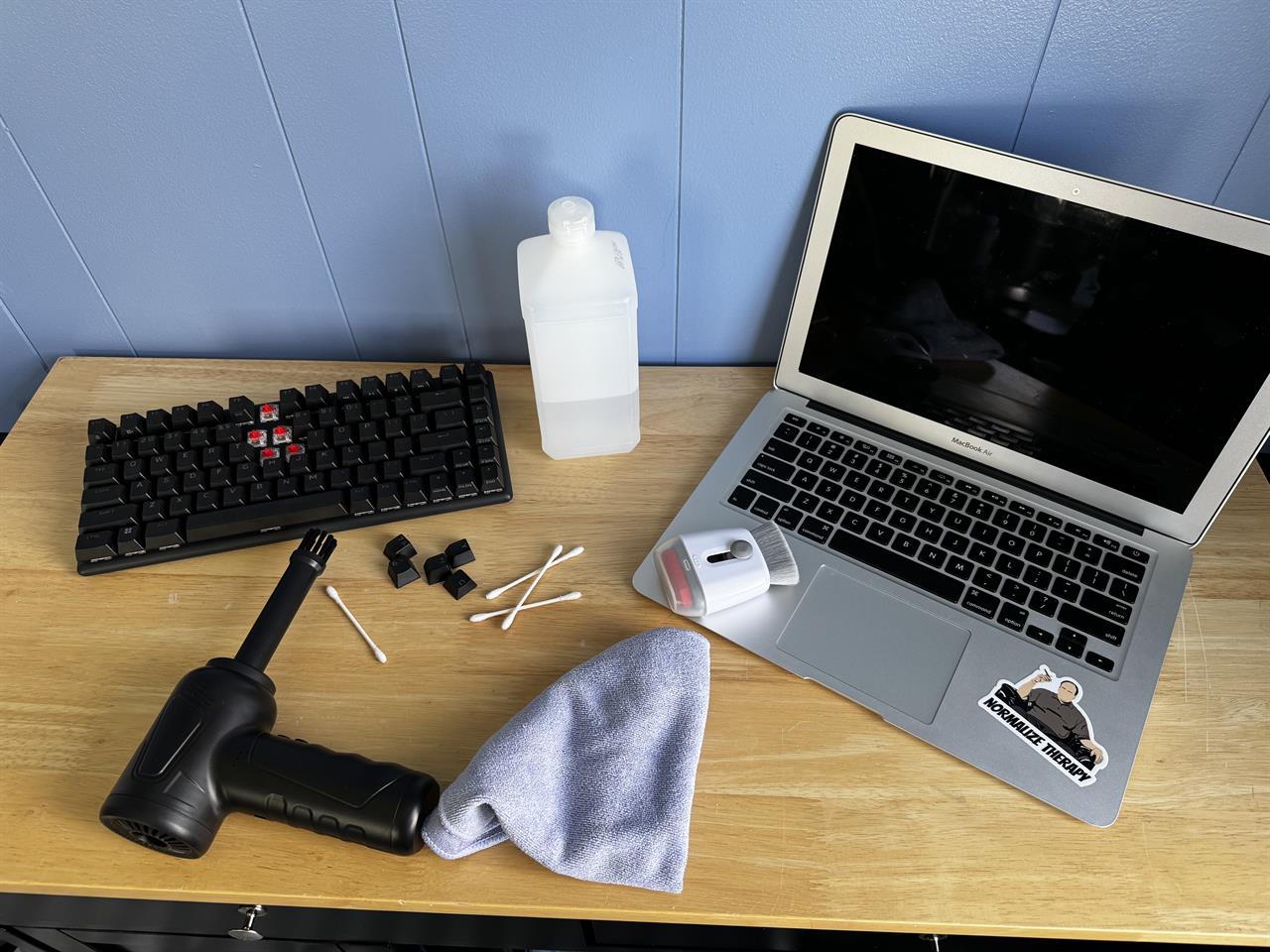
You don’t need expensive products, but you must choose the right tools. Using unsuitable materials can scratch surfaces or leave residue. Here’s what you really need:
Microfibre cloths: Non-abrasive and lint-free, perfect for screens and aluminium surfaces. They trap dust and oils without scratching.
Isopropyl alcohol (70%): Safe for electronic devices, evaporates quickly. Only use diluted versions. It helps remove grease and germs from surfaces.
Compressed air: Removes dust from vents and keyboards without contact. This keeps sensitive parts clear without touching them.
Soft brush: Helps remove debris from hard-to-reach areas, like between keys or inside ports.
Cotton swabs: Useful for corners and between keys. They clean small spaces safely.
Distilled water: Avoid tap water, which leaves mineral spots and can damage the screen coating.
Specialised keyboard cleaning gel: Optional, helps lift dust without moisture. It’s useful for deep cleaning if you use your MacBook in dusty places.
Never use paper towels, rough fabrics, or household cleaners like bleach. These can scratch the screen and damage the anti-reflective coating. Some users make the mistake of using window cleaning sprays, which often contain ammonia or other chemicals. These can ruin the screen’s delicate coating and cause permanent stains.
If you’re unsure about a product, check its ingredients or consult Apple’s official recommendations.
A non-obvious tip: keep a dedicated cleaning kit for your MacBook, separate from household cleaners. This prevents accidental use of the wrong products and helps you maintain consistency.
Step-by-step Guide: Cleaning Your Macbook Exterior
Unplug And Power Down
Always shut down your MacBook and unplug it from power before starting. This prevents electrical risks and allows safe access to all surfaces. Make sure to remove any connected accessories, like external drives or headphones. If your MacBook is warm, let it cool down for a few minutes before cleaning.
Cleaning The Screen
The MacBook screen is sensitive and can be damaged by the wrong products. Here’s how to clean it safely:
Use a dry microfibre cloth to gently wipe dust and fingerprints. Move in small circles, don’t press too hard.
For tougher marks, lightly dampen the cloth with distilled water or a 70% isopropyl alcohol solution. Never spray directly onto the screen.
Wipe gently, avoiding the edges where moisture could seep in.
Allow the screen to air dry before closing the lid.
Apple recommends avoiding window cleaners, aerosol sprays, and solvents. These can harm the anti-glare coating and cause permanent marks.
If your screen has oily smudges, apply a tiny amount of diluted alcohol to the cloth, then wipe in one direction for best results. For extra clarity, finish with a dry section of the cloth. Some users miss cleaning the bezel (the edge around the screen), which often collects dust.
Wipe this area carefully to prevent dust from falling onto the screen later.
Cleaning The Keyboard And Trackpad
Keyboards collect oils, crumbs, and dust. Trackpads also get sticky or smudged.
Use compressed air to blow out dust between keys. Hold the can upright and spray short bursts.
Dampen a microfibre cloth with diluted isopropyl alcohol and wipe the keys and trackpad. Don’t let liquid drip or pool.
For stubborn dirt, use cotton swabs or a soft brush around the edges.
Wait until all surfaces are dry before using your MacBook again.
Avoid using too much pressure, which can dislodge keys or damage the trackpad. Some MacBook models have butterfly keyboards, which are more sensitive to moisture and debris. If your keys feel sticky after cleaning, repeat the process with a dry cloth and compressed air.
A practical tip: Turn your MacBook upside down while using compressed air. This helps dislodge crumbs and dust more effectively.
Cleaning The Body And Ports
The aluminium body shows fingerprints and dirt easily. Ports can fill with dust, affecting connections.
Wipe the exterior with a dry microfibre cloth.
For sticky spots, use a slightly damp cloth with isopropyl alcohol.
Use compressed air or a soft brush to clean ports. Never insert sharp objects.
Pay special attention to the ports. Dust inside USB-C, HDMI, or headphone ports can cause connection problems. Use short bursts of air and check the ports with a light to ensure they’re clear. If you see stubborn debris, gently brush it out.
Some users forget to clean the underside of their MacBook. This area often collects dust and can scratch if placed on rough surfaces. Wipe it regularly to keep your device safe.
Cleaning Data Comparison
Below is a comparison of cleaning methods and their effect on device longevity.
Cleaning Method | Risk Level | Average MacBook Lifespan | Common Issues Prevented |
|---|---|---|---|
Microfibre Cloth + Alcohol | Low | 6+ Years | Screen stains, keyboard wear |
Household Cleaner | High | 4 Years | Coating damage |
No Cleaning | Medium | 3 Years | Overheating, sticky keys |
Cleaning The MacBook’s Vents And Internal Parts
Why Vent Cleaning Is Critical
MacBooks use passive cooling and fans to stay at safe temperatures. Dust in vents and fans makes the device run hotter, leading to performance drops and battery stress. In extreme cases, overheating damages the motherboard.
Regular vent cleaning is especially important if you use your MacBook in dusty environments or near pets. Animal hair and lint can quickly clog vents, reducing airflow. Many users don’t realise that even a small layer of dust can cause the fan to work harder, leading to noise and faster battery drain.
A less obvious issue is that blocked vents can cause the metal body to heat unevenly, which may warp the casing over time. Keeping vents clear helps preserve both performance and physical integrity.
Safe Steps For Vent Cleaning
Shut down and unplug your MacBook.
Use compressed air to blow dust from vent openings. Hold the can upright, don’t tilt or shake.
If you notice continued overheating, consider professional cleaning. Opening the case yourself can void the warranty and risk static damage.
For extra protection, clean vents monthly, especially if your workspace is dusty. If you see visible buildup, increase frequency. Never use a vacuum cleaner, as static discharge can damage internal components.
Internal Cleaning: What You Should Know
Most users shouldn’t open their MacBook unless trained. Apple’s warranty doesn’t cover damage from unauthorised repairs. If you suspect internal dust buildup, take your device to an Apple-authorised service centre.
Apple recommends professional cleaning every 2–3 years for devices used in dusty environments.
A hidden insight: internal dust often causes slow performance before you notice overheating. If your MacBook starts running slowly and the fan is loud, internal cleaning may help.
Maintaining Your MacBook for Long-term Performance
Regular Cleaning Schedule
Consistency is key. Cleaning once isn’t enough. Here’s a recommended schedule:
Screen and keyboard: Weekly
Vents and ports: Monthly
Deep internal cleaning: Every 2–3 years (by professionals)
Some users find it useful to set calendar reminders. You can also add cleaning tasks to your phone or computer reminders, making regular maintenance automatic.
Protecting Against Spills And Accidents
MacBooks are not waterproof. Spills can cause immediate damage. Prevention tips:
Keep liquids away from your workspace.
Use a keyboard cover if you often eat or drink nearby.
If a spill occurs, shut down immediately, disconnect power, and turn the device upside down. Seek professional help.
A practical tip: If you travel often, carry a small absorbent cloth in your laptop case. If a spill happens, you can act quickly to limit damage.
Safe Storage And Transport
Storing your MacBook carefully prevents dust and scratches.
Use a padded sleeve or case for transport.
Avoid extreme temperatures and humidity.
Store in a clean, dry place when not in use.
If you live in a humid area, consider placing silica gel packs in your laptop bag. They absorb moisture and help protect your MacBook from condensation.
Battery Care
Cleaning is not only about the exterior. The battery needs care, too.
Avoid letting the battery drop below 20% often.
Don’t leave it plugged in all the time.
Clean charging ports monthly.
Occasionally, let your battery cycle from 100% down to about 20% and then recharge. This helps maintain battery health. Check battery status using macOS “System Report” for early signs of wear.
Comparison: Apple Vs Third-party Maintenance
Here’s a comparison of official Apple support and third-party repair shops for cleaning and maintenance.
Service Provider | Cost (Avg.) | Warranty Impact | Expertise Level |
|---|---|---|---|
Apple Authorised Service | £40–£80 | None | High |
Third-Party Shop | £20–£60 | May void | Varies |
DIY | £0–£10 | Possible risk | Low–Medium |
Safe Cleaning Products For Macbook: What To Use And Avoid
Products You Can Use
Microfibre cloths: Essential for screen and body.
70% isopropyl alcohol: Safe for electronics.
Compressed air: For vents and keyboards.
Distilled water: Avoid tap water.
Keyboard cleaning gel: Optional for deep cleaning.
If you want to clean the screen more often, consider buying a screen cleaning spray made for electronics, but check that it’s alcohol-based and contains no ammonia.
Products To Avoid
Bleach or ammonia-based cleaners
Window cleaning sprays
Paper towels or rough fabrics
High-pressure water sprays
Aerosol sprays directly on surfaces
Using the wrong products can damage coatings, cause corrosion, and reduce device life.
Example: Real-world Damage
A user applied glass cleaner to their MacBook screen. Within weeks, the anti-reflective coating began to peel, causing blurry spots. Repairs cost over £200, and the warranty did not cover damage from improper cleaning.
Another user used a cotton T-shirt to clean the screen, which left micro-scratches. These scratches reflected light and made the screen harder to read. Always use proper materials.
Deep Cleaning: When And How To Get Professional Help
Signs You Need Professional Cleaning
Some issues need expert care:
Persistent overheating
Fan noise or unusual sounds
Sticky keys not solved by surface cleaning
Visible dust inside ports or vents
Professional technicians use anti-static tools and can safely open the device. Apple recommends professional cleaning every few years, especially in dusty workplaces.
A sign many people miss: if your MacBook fan runs constantly, even when doing simple tasks, internal cleaning may be needed.
How Professional Cleaning Works
The device is opened with proper tools.
Internal fans and heatsinks are cleaned.
Ports and connectors are checked.
All surfaces are wiped with approved products.
The average cost in the UK is £40–£80. It’s a good investment if you notice performance drops or physical signs of dust.
Professionals also check for loose connections, battery swelling, and signs of corrosion. If you use your MacBook in a café or shared workspace, professional cleaning can remove hidden dirt and germs.
Software Maintenance: Keeping Your Macbook Running Smoothly
Regular Updates
Cleaning is not just physical. Keeping macOS updated prevents bugs, security risks, and slowdowns.
Check for updates monthly.
Enable automatic updates if possible.
If you skip updates, you risk security flaws and software conflicts. Updates often improve battery life and speed.
Disk And System Maintenance
Use Disk Utility to check for errors.
Clean up unused files and apps.
Restart your MacBook weekly to clear memory.
A helpful tip: Use the built-in “Storage Management” tool to find large files and unused apps. Deleting old downloads frees space and keeps your MacBook running smoothly.
Example: Performance Boost
A 2023 survey found that users who updated macOS and cleaned up files monthly saw up to 30% faster performance compared to those who did not.
Another benefit: regular software maintenance helps detect malware or unwanted programs early.
Backup And Recovery
Regular backups protect your data in case of hardware failure.
Use Time Machine or iCloud.
Back up weekly or before major cleaning.
If you plan to clean your MacBook deeply or transport it, back up your files first. This prevents data loss from accidents.
Common Mistakes To Avoid When Cleaning Your Macbook
Many users make errors that cause damage or void warranties. Here are the most frequent mistakes:
Using too much liquid can cause moisture damage.
Spraying cleaners directly onto the screen.
Using rough fabrics or paper towels that scratch surfaces.
Opening the device without proper tools or training.
Ignoring vents and ports can lead to overheating.
Not shutting down before cleaning.
Using household chemicals instead of approved products.
Avoiding these mistakes is essential for safe cleaning.
A hidden mistake: using canned air upside down, which can spray liquid propellant. Always hold the can upright.
Real-life Examples: Macbook Cleaning Successes And Failures
Success Story
Maria, a university student, cleaned her MacBook weekly with a microfibre cloth and compressed air. After five years, her device still looked new, and she never had overheating issues. She followed Apple’s guidelines and scheduled annual professional maintenance.
Maria also used a keyboard cover and cleaned her charging port every month. She kept drinks away from her workspace and backed up her files regularly. These small steps kept her MacBook reliable.
Failure Story
John used kitchen cleaner on his MacBook Pro screen. The anti-glare coating peeled, making the screen unusable. Repairs cost more than £200, and Apple refused warranty coverage. John now uses only microfibre cloths and distilled water.
John also ignored vent cleaning, leading to noisy fans and battery overheating. He learned that proper care saves money and hassle.
Credit: www.microcenter.com
Cleaning And Maintenance Data Table
Below is a summary of cleaning frequency and recommended actions for different MacBook models.
MacBook Model | Screen Cleaning | Keyboard Cleaning | Vent Cleaning | Professional Maintenance |
|---|---|---|---|---|
MacBook Air (M1/M2) | Weekly | Weekly | Monthly | Every 2 Years |
MacBook Pro (2016–2023) | Weekly | Weekly | Monthly | Every 2 Years |
Older MacBook Pro (2012–2015) | Weekly | Weekly | Monthly | Annually |
If you use your MacBook daily in a busy or dirty environment, consider increasing cleaning frequency. Adjust your schedule based on usage and workspace.
Expert Tips for MacBook Care
Use a screen protector to reduce fingerprints and scratches.
Keep your workspace clean to minimise dust.
Avoid stacking heavy objects on your MacBook.
Use a keyboard cover if working in dusty environments.
Schedule reminders for cleaning and software updates.
Store your MacBook on a flat, dry surface.
One non-obvious tip: rotate your MacBook occasionally when charging. This prevents uneven wear on the ports and battery.
Another often-missed insight: cleaning your MacBook before travel reduces the risk of dust and dirt entering during transit.
A bonus tip: Clean your hands before using your MacBook. Oils and dirt from fingers are the main source of keyboard and trackpad stains.
Frequently Asked Questions
How Often Should I Clean My Macbook?
Regular cleaning is best: weekly for the screen and keyboard, monthly for the vents and ports. Professional maintenance every 2–3 years is recommended, especially in dusty environments.
Can I Use Alcohol Wipes To Clean My Macbook Screen?
Yes, but only use 70% isopropyl alcohol wipes. Avoid wipes with added fragrances or chemicals. Always wipe gently and avoid excess moisture.
What Should I Do If I Spill Liquid On My Macbook?
Immediately shut down and unplug your device. Turn it upside down to drain, and seek professional help as soon as possible. Do not try to clean or turn it on yourself.
Will Cleaning My Macbook Void The Warranty?
Surface cleaning with approved products does not void the warranty. Opening the case or using unapproved chemicals can void Apple’s warranty. Check Apple’s official guidelines for details.
How Do I Clean Sticky Keys On My Macbook?
Use compressed air and a microfibre cloth with diluted isopropyl alcohol. For severe stickiness, consult a professional. Avoid using sharp objects or excessive liquid.
Internal Linking Suggestions
Link to a guide on macOS system optimisation for better software maintenance.
Link to an article about Apple’s warranty and repair policies for safe cleaning.
Link to a page covering MacBook battery care tips for complete device maintenance.

Credit: japannext.fr
Low-competition Keywords
Safe MacBook cleaning techniques
How to clean a MacBook screen without damage
Best products for MacBook cleaning
MacBook keyboard maintenance tips
MacBook vent cleaning guide
Final Thoughts
A clean and well-maintained MacBook runs faster, lasts longer, and looks better. Using proper tools and following safe steps prevents costly mistakes and keeps your device in excellent condition. Remember to clean regularly, use approved products, and avoid common errors.
For deep cleaning or persistent problems, professional help is worth the investment. With these expert tips and practical advice, your MacBook will stay reliable and ready for every task.
If you want detailed Apple-approved instructions, see the official Apple Cleaning Guide for further guidance.

 MacBook Gear